Are Steam Mops Safe for Hardwood and Laminate Floors?
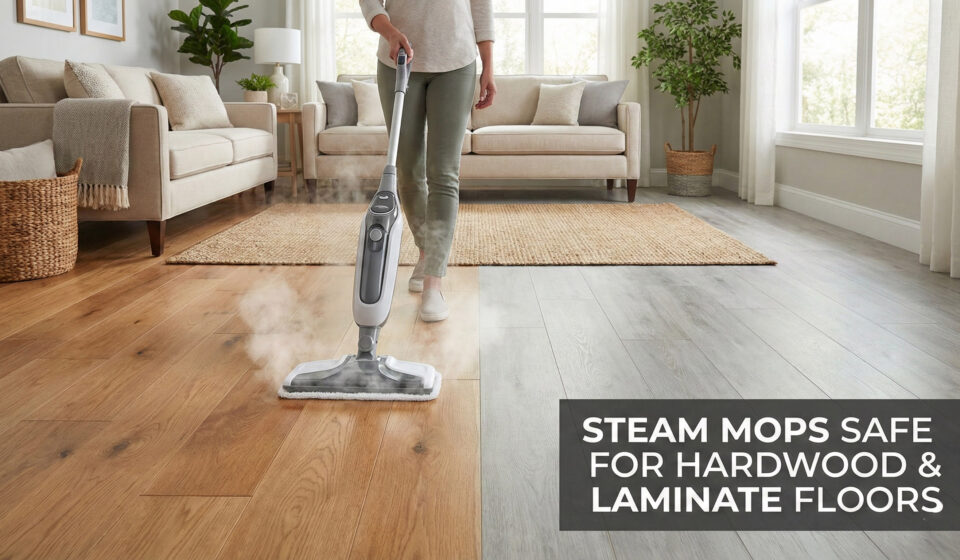
Steam mops are popular because they promise chemical-free cleaning and sanitization using just water and high heat. For many homes with hard surfaces, they can make regular maintenance easier. But when it comes to hardwood and laminate floors, the answer isn’t a simple yes/no — it depends on the floor type, finish, and how the steam mop is used.
This guide will help you understand:
- When steam mops are appropriate
- The risks involved with certain floors
- What features a safer steam mop has
- Whether a product like the Shark Steam & Scrub All-in-One Steam Mop is a good choice for your floors
Table of Contents
How Steam Mops Work
Steam mops heat water to produce steam that:
- Loosens dirt and stains
- Sanitizes surfaces without chemicals
- Uses microfiber pads to lift grime
In theory, that sounds ideal. But steam cleaning combines high heat and moisture, which can be problematic for materials that are sensitive to water or changes in temperature.
Hardwood Floors: Risks vs. Steam Cleaning
Hardwood floors are often finished with a protective coating, but that doesn’t make them impervious to steam.
Why Some Caution Is Needed
Experts warn that:
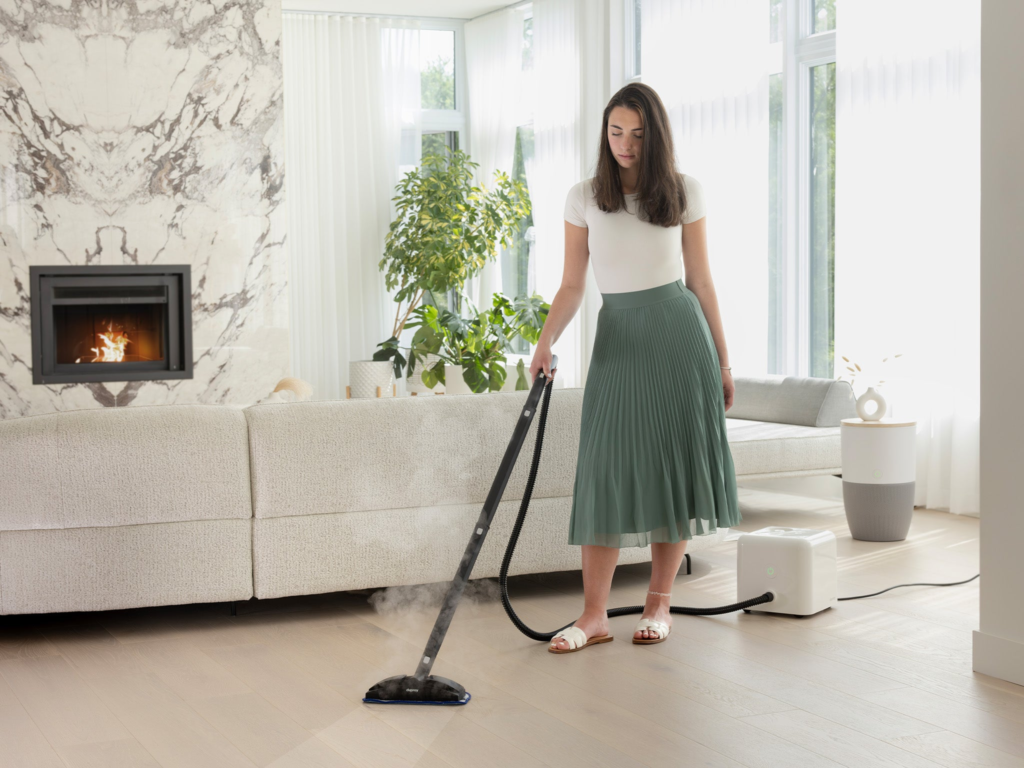
- Moisture from steam can seep into grain and seams
- Heat and wetness can cause warping, cupping, or finishing damage
- Even sealed hardwood can have gaps that steam penetrates over time
Consumer Reports strongly advises against using steam mops on wood floors, noting that moisture and heat can distort wood planks and damage finishes.
Practical Reality
- Some manufacturers of steam mops may claim safety on sealed wood, but flooring professionals generally disagree because real-world floors experience wear, scratches, and tiny entry points for moisture.
- Expert home care labs have also found that even “safe” steam usage can lead to dullness, moisture penetration, or warping over time.
Bottom line:
If your hardwood floor is expensive or warranty-covered, traditional steam mopping is a high-risk choice compared to gentle damp mopping.
Laminate Floors: A Moisture Vulnerability
Laminate flooring is fundamentally different from solid wood — it often has a fiberboard core that is extremely sensitive to moisture.
Manufacturer Guidance
Most laminate floor manufacturers strongly advise against steam cleaning, because:
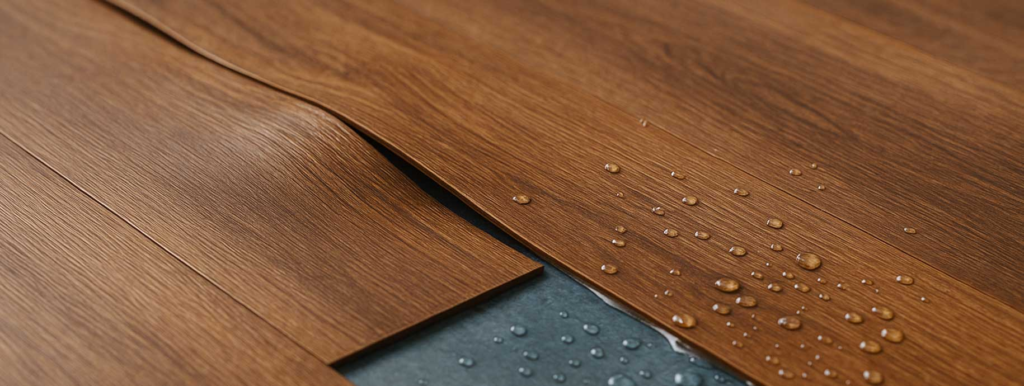
- The fiberboard core can swell and warp
- Seams between planks can let steam reach internal layers
- Warranty can be voided if steam is used
Multiple flooring authorities note that steam can cause irreversible damage to laminate over time, even if it seems harmless at first.
User Experiences and Expert Opinion
DIY and cleaning communities often share anecdotal accounts where steam cleaning led to lifting or warping on laminate floors.
Bottom line:
Steam mops are generally not recommended for laminate floors, and safer cleaning methods involve damp mopping and gentle cleaners.
When Steam Mops Can Be Safe
There are floor types where steam mops tend to be appropriate:
Tile and Stone Floors
Because these are non-porous, steam won’t usually penetrate the material itself. Grout might require careful technique, but tile surfaces tolerate steam well.
Sealed Hard Surfaces (carefully)
If a floor has a factory-applied, high-quality seal, and you use:
- Low steam settings
- Quick passes
- Minimal dwell time
Then some steam mops can be used with caution.
Features That Help Safety
A good steam mop for harder surfaces ideally has:
- Adjustable steam levels
- Quick steam control trigger
- Dry steam or low moisture output
- Microfiber pads that absorb excess moisture
Case Study: Shark Steam & Scrub All-in-One Steam Mop
One example of a modern steam mop that addresses some concerns is the Shark Steam & Scrub All-in-One Steam Mop.
No products found.
This model combines steam with rotating scrub pads and multiple modes:
- Three steam modes (Light, Normal, Deep) for versatile cleaning
- Rotating microfiber pads to lift grime more effectively than simple steam
- LED headlights to highlight dirt on the floor
- Designed to provide up to twice the stain-lifting power versus traditional steam mops on sealed hard floors
This means that if you’re going to consider using a steam mop on a compatible surface (like sealed tile or stone), a product like this gives you better control and scrubbing action than basic single-pad designs.
Important Note
Even with these features:
- It should only be used on sealed hard floors
- It is not inherently safe for all hardwood or laminate floors
- Floor manufacturers’ guidance takes precedence over marketing claims
So the Shark model can be a useful tool for many families — but not as a green light for use on every floor type.
Safer Alternatives for Sensitive Floors
If your home has hardwood or laminate, expert cleaning advice suggests:
Everyday Cleaning
- Sweep or vacuum first
- Use a microfiber damp mop
- Avoid excess moisture
Spot Cleaning for Stains
- Use gentle floor-specific cleaners
- Avoid steam on wood-based materials
This preserves the finish, prevents warping, and protects your flooring investment.
Making the Buy Decision
Here’s a practical way to decide:
Avoid steam mops if:
- You have laminate floors
- Your hardwood floor is old, worn, or not perfectly sealed
- You want a no-worry solution with no moisture risk
Consider steam mops if:
- Your floors are ceramic, porcelain, or stone
- You understand how to use low steam settings
- You prefer chemical-free sanitization and are careful with technique
When choosing a steam mop for appropriate floors:
- Look for models with adjustable steam
- Avoid steam when flooring gets scratched or worn
- Prioritize control over brute force steam
Final Recommendation
Steam mops can be powerful cleaning tools — but they are not universally safe.
- They are often not safe for laminate floors, due to moisture damage risk.
- They can be risky on hardwood floors, especially if not perfectly sealed.
- They work best on tile, stone, and fully sealed surfaces.
If you opt for a steam mop, choose one with good steam control and scrubbing power, such as the Shark Steam & Scrub All-in-One Steam Mop, and use it on surfaces that tolerate steam. Avoid using steam on floors where manufacturers explicitly advise against it.
FAQs
Is a steam mop worth buying if I have hardwood floors?
Only if your floors are fully sealed and you use the lowest steam setting with great care; otherwise, alternative cleaning methods are safer.
Can steam mops damage laminate floors?
Yes — most laminate manufacturers advise against steam because the moisture can cause swelling, warping, and seam separation.
Can I use a steam mop occasionally on laminate?
Even occasional use can lead to long-term damage, so it’s generally best avoided.
Are there steam mops designed specifically for laminate?
Some models with micro dry steam and advanced control claim better safety, but you should confirm with flooring manufacturer recommendations before using.